 Played ✓
EXP-09of 10Strategy
The Tiny Kingdom
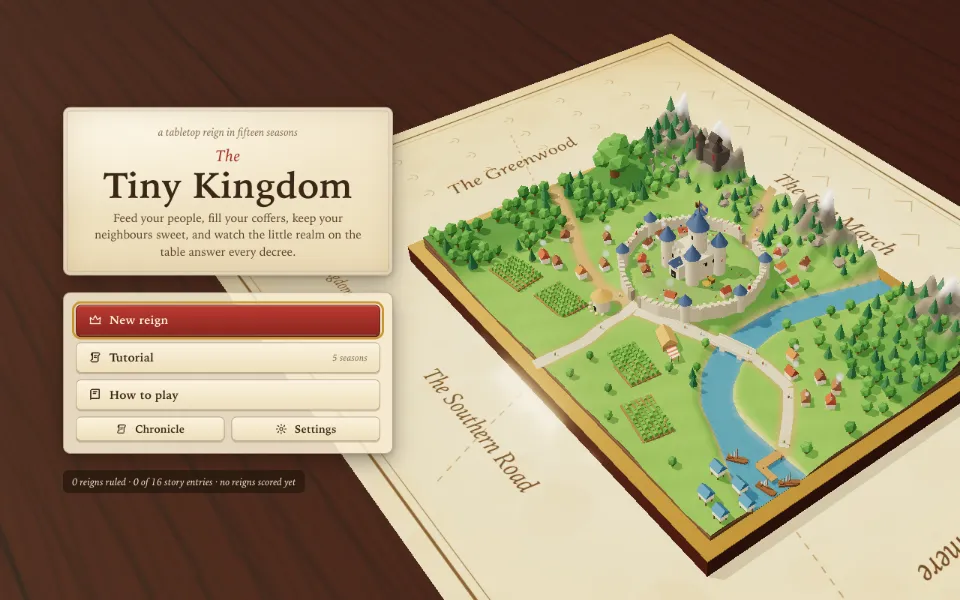
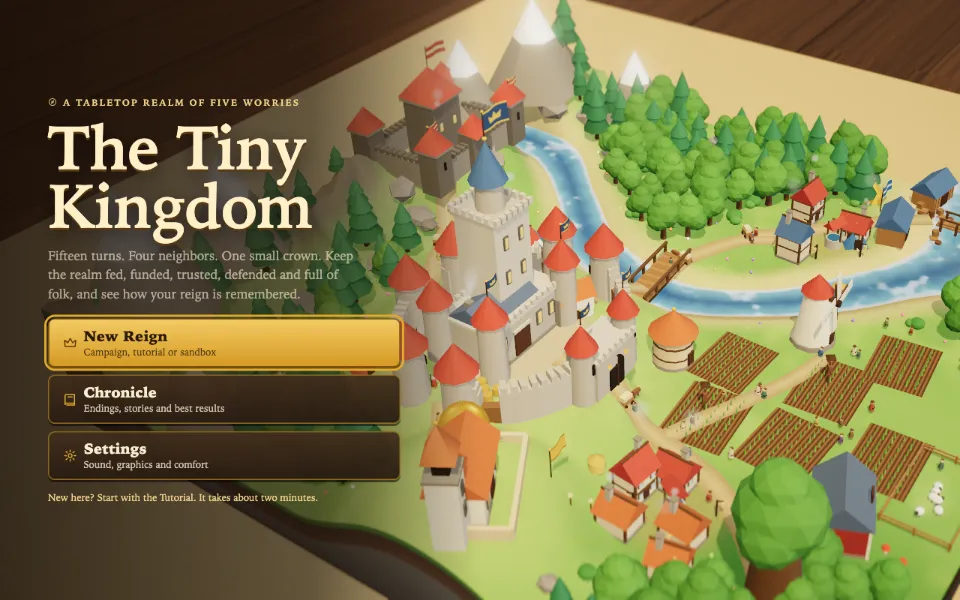
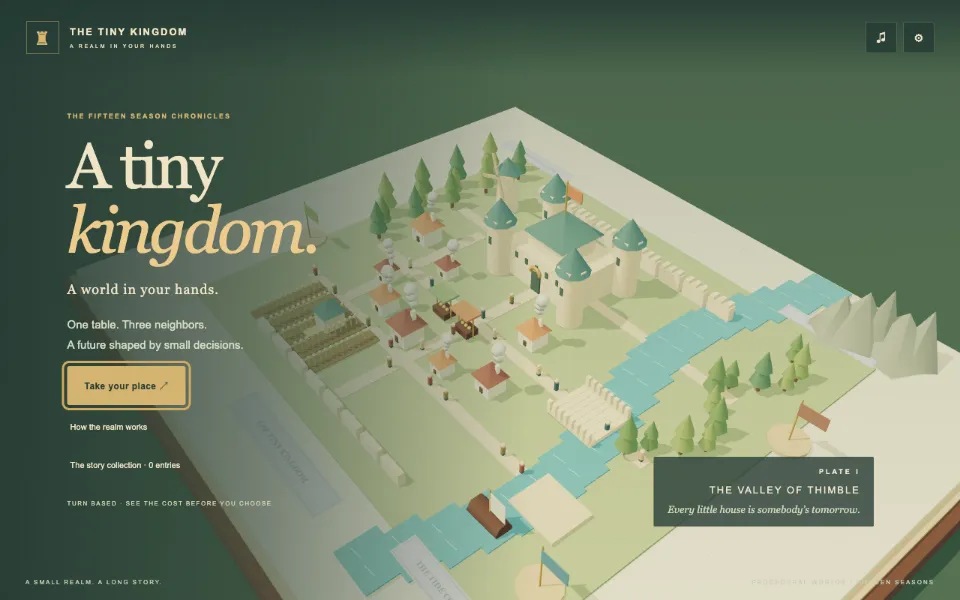
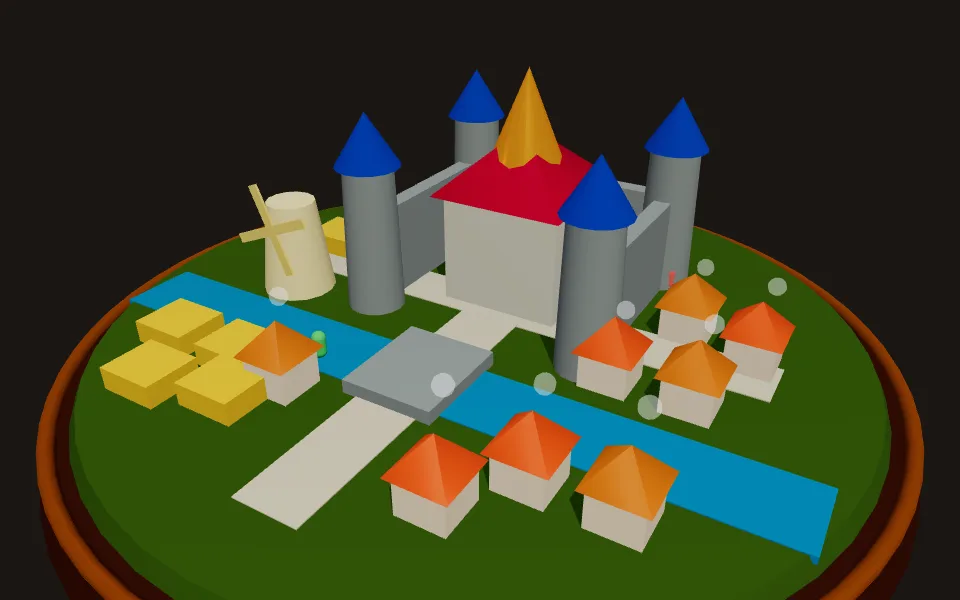
Rule a tabletop realm for fifteen seasons. Every decree shows up on the diorama.
One brief went to frontier models. Here's what each of them built. Pick a version and play.
Played ✓
 Played ✓
 Played ✓
 Played ✓
Gemini 3.8 Flash
High effort · coming soon
BuildingYour verdict
Which one did you like best?
Play at least two versions, then come back and vote. They open in a new tab.
The brief
Every model got exactly this.
416 words, copied straight from the prompt file. No follow-up hints, no model-specific tweaks.
- Stack
- Three.js, TypeScript, Vite
- Assets
- None. All generated in code
- Controls
- Mouse, keyboard, touch
You are a senior browser-game engineer and strategy-game designer. Inspect the repository and implement The Tiny Kingdom as a complete, replayable browser game using Three.js directly for its 3D kingdom diorama and animated world. Preserve unrelated project code. If starting fresh, use Vite and TypeScript.
Game
Create a compact turn-based kingdom simulation. The player makes one or two meaningful decisions per turn while a miniature 3D kingdom changes in response. A campaign lasts about 15 turns. The goal is to keep the realm stable and reach a satisfying ending; the player should understand how choices affect food, treasury, trust, defense, and population.
Each turn presents a short event and two or three clear actions: tax or invest, negotiate or defend, build a granary or train guards, welcome or restrict newcomers. Show the immediate costs and likely effects before confirmation, but let events introduce understandable uncertainty. Keep outcomes fair and explain them after each turn. No hidden irreversible losses without warning.
Systems and replay
Implement five tracked resources or realm conditions with visible minimum/maximum ranges. Ensure no single meter is the only winning strategy. Add relationships with at least three neighboring factions, each with a distinct value or concern. Provide at least three possible endings based on the realm’s accumulated condition and choices. Let the player inspect a short history of decisions and their consequences.
Use seeded scenarios so a run can be reproduced. Include a campaign mode with 15 turns, a shorter tutorial scenario, and an optional sandbox. Add event variety and choice combinations so replay feels different, but do not add daily login pressure, streaks, or artificial energy limits. Store best outcomes, unlocked story entries, settings, and recent seed locally.
3D presentation
Render the kingdom as a detailed tabletop diorama: castle, roads, farms, river, villages, walls, neighboring lands, and moving people. The world should visibly respond to decisions: crops grow, roads fill, walls rise, smoke appears, visitors arrive, or villages empty. Use a slow orbit camera with limited pan/zoom, warm lighting, paper-map motifs, parchment-like interface panels, and restrained particles. Keep animations short so decisions do not become slow.
Interface and technical requirements
Implement title, scenario selection, tutorial, kingdom screen, event choice, resource report, history, pause, ending, and restart. The HUD should clearly show all realm conditions, current turn, active event, and consequences. Make choice buttons functional and keyboard-accessible. Use crisp HTML/CSS overlays and direct Three.js for the diorama. Handle resize, focus loss, WebGL failure, and cleanup. Test choices, resource changes, endings, seed reproducibility, save/load, and sandbox. Run build/checks, document setup, and report implementation and limitations.