 Played ✓
EXP-10of 10Music
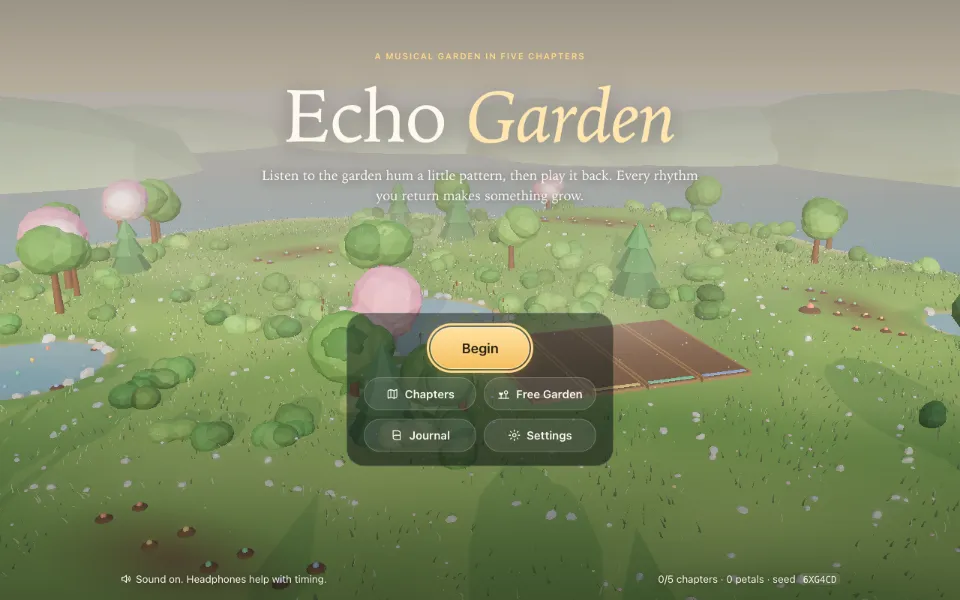
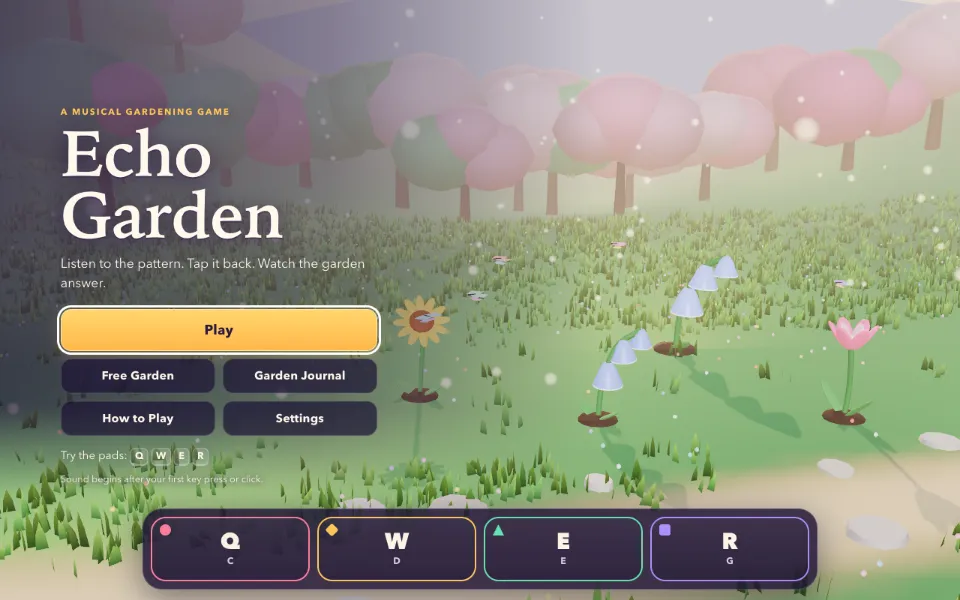
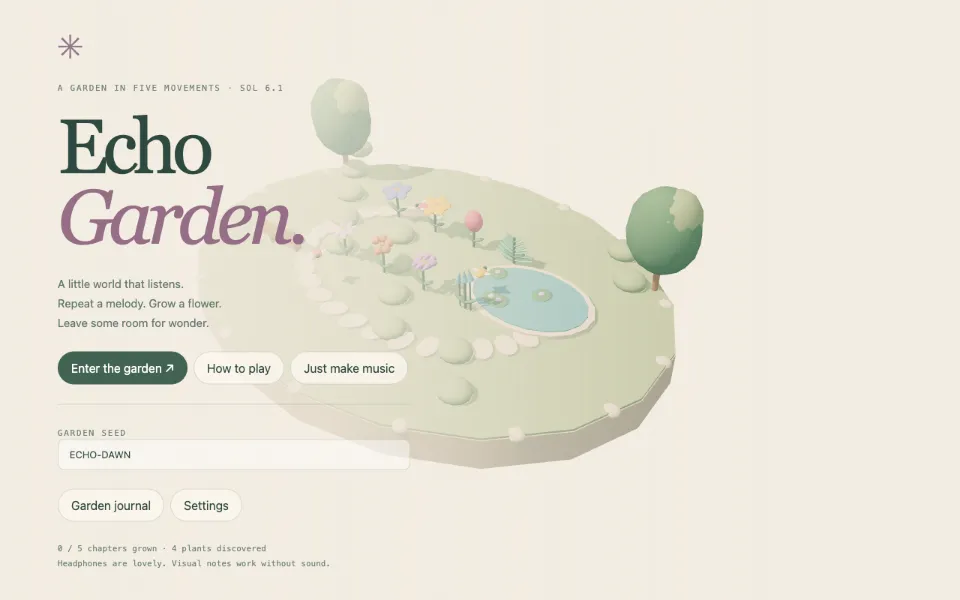
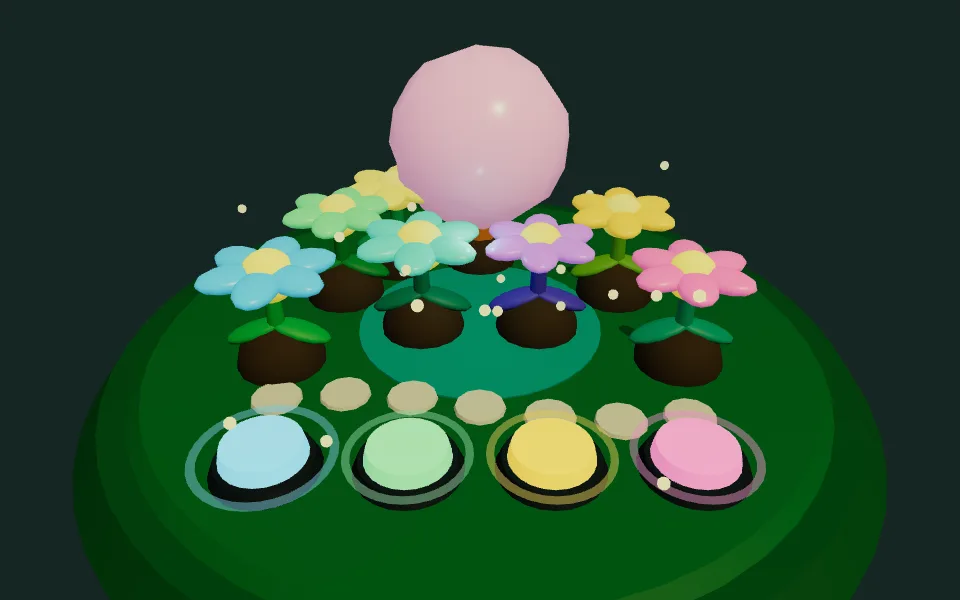
Echo Garden
The garden hums a pattern, you play it back, and things grow. Sound on for this one.
One brief went to frontier models. Here's what each of them built. Pick a version and play.
Played ✓
 Played ✓
 Played ✓
 Played ✓
Gemini 3.8 Flash
High effort · coming soon
BuildingYour verdict
Which one did you like best?
Play at least two versions, then come back and vote. They open in a new tab.
The brief
Every model got exactly this.
455 words, copied straight from the prompt file. No follow-up hints, no model-specific tweaks.
- Stack
- Three.js, TypeScript, Vite
- Assets
- None. All generated in code
- Controls
- Keyboard, mouse, touch
You are a senior browser-game engineer, 3D audio-game designer, and web-audio programmer. Inspect the repository and implement Echo Garden as a complete playable browser game using Three.js directly for the garden, plants, creatures, and effects. Preserve unrelated code. If starting fresh, use Vite and TypeScript.
Game
Create a musical gardening game where plants respond to rhythm and simple melodies. The player listens to a short pattern, then repeats it using keyboard notes or on-screen pads. Correct rhythms make seeds sprout, flowers bloom, animals visit, and weather shift. Do not require microphone access; it may be an optional feature only if it is clearly explained and permission is requested after user action. The whole game must work with keyboard and mouse.
Use Q/W/E/R or four visible note pads to play distinct synthesized notes. Let the player tap a rhythm in a forgiving timing window. Start with a two- or three-beat pattern and gradually introduce rests, longer rhythms, and simple note sequences. Show a visual pulse, replay button, and timing feedback. Do not punish experimentation in free-garden mode.
Progression
Create five small garden chapters, each with a new plant family, musical scale, and environmental change. Each chapter has a short sequence of rhythm challenges and a clear goal such as growing a melody flower or attracting a specific creature. On success, unlock a new seed, color palette, or decorative object. Add a free-play garden where the player can place plants and compose without timers or score.
Implement at least eight plant types with distinct growth animations and sound responses. Let nearby compatible plants harmonize when played together. Show a simple garden journal describing discovered plants and combinations. Use seeded challenge patterns for reproducible play. Save progress, settings, unlocked cosmetics, and recent seed locally. Keep progression short and rewarding; avoid daily streaks and timed rewards.
Visual and sound design
Build a dreamy 3D garden with soft dawn light, floating pollen, curved paths, little ponds, layered leaves, musical particles, and animated flowers that pulse to notes. Use a coherent color palette and maintain strong contrast for note pads and challenge states. Generate sounds with Web Audio or use assets already in the repository. Provide independent music/effects volume and mute controls. Avoid loud autoplay: begin audio only after a user gesture. Respect reduced-motion settings.
Interface and technical requirements
Implement title, short tutorial, chapter selection, active rhythm challenge, replay/record controls, garden journal, free-play, pause, completion, and restart. Show the beat timeline, current pattern, timing feedback, and progression. Make all note pads and controls keyboard-accessible. Use a responsive Three.js renderer, cleanup audio and GPU resources, handle resize and WebGL failure, and save/load progress locally. Test audio activation, rhythm input, forgiving timing, plant growth, unlocks, free-play, and persistence. Run build/checks, update README with run instructions and controls, and report implementation status and limitations.