 Played ✓
EXP-04of 10Time management
Haunted Night Shift
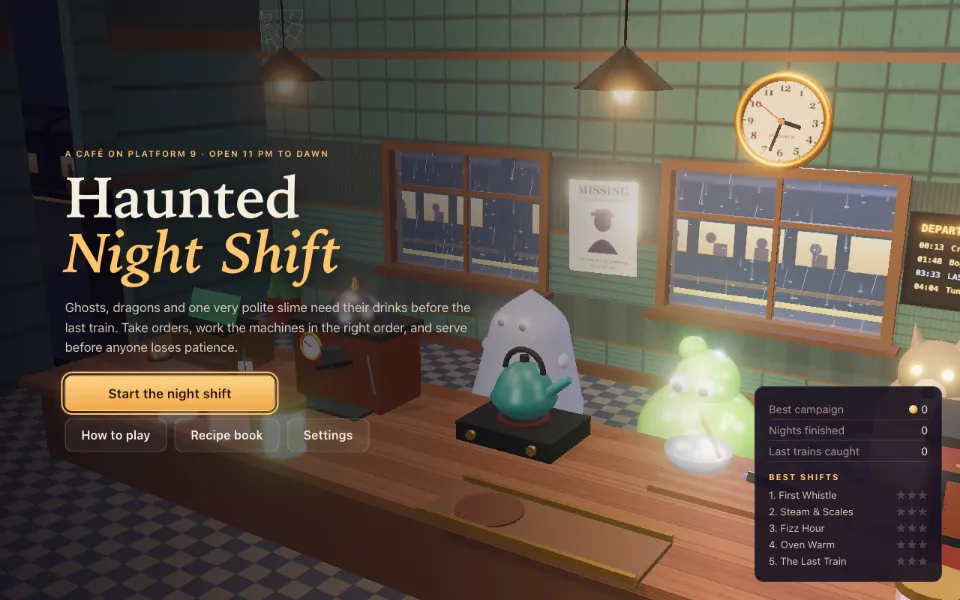
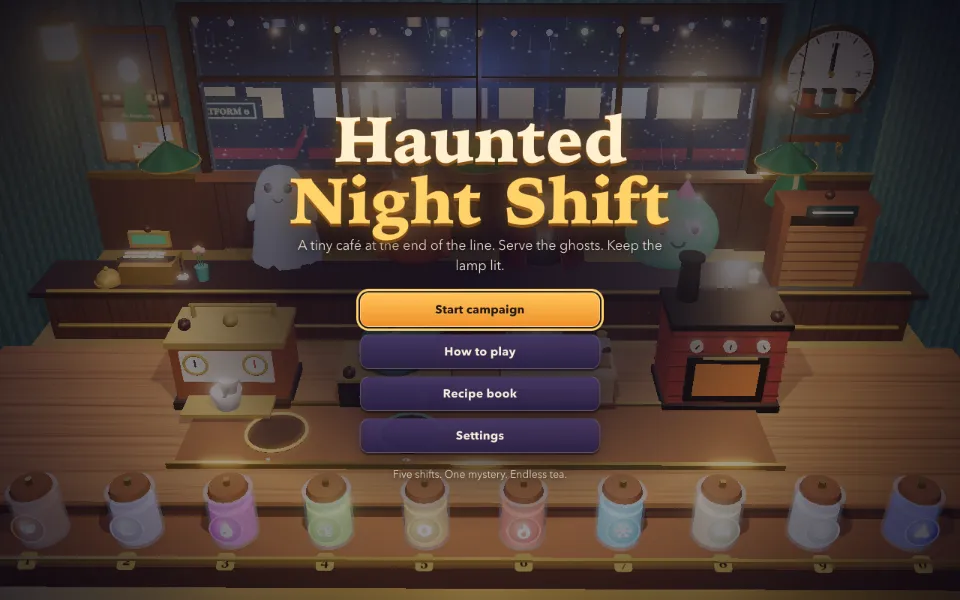
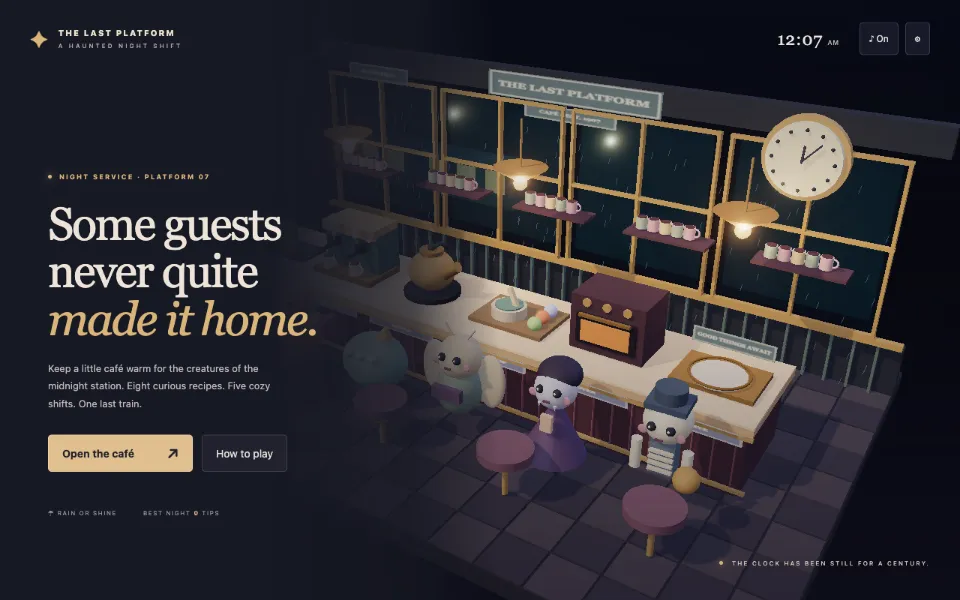
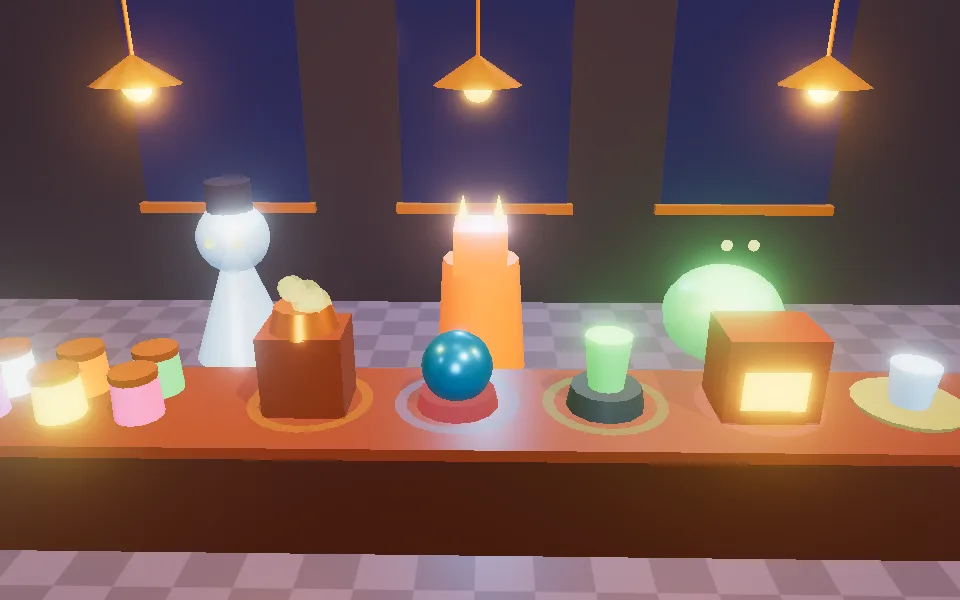
Run a café in a haunted train station. The customers are ghosts, dragons and slimes, and none of them like to wait.
One brief went to frontier models. Here's what each of them built. Pick a version and play.
Played ✓
 Played ✓
 Played ✓
 Played ✓
Gemini 3.8 Flash
High effort · coming soon
BuildingYour verdict
Which one did you like best?
Play at least two versions, then come back and vote. They open in a new tab.
The brief
Every model got exactly this.
474 words, copied straight from the prompt file. No follow-up hints, no model-specific tweaks.
- Stack
- Three.js, TypeScript, Vite
- Assets
- None. All generated in code
- Controls
- Keyboard, mouse, touch
You are a senior browser-game engineer and 3D game designer. Inspect the repository and implement Haunted Night Shift as a fully playable browser game using Three.js directly for the café, customers, machines, and effects. Preserve unrelated functionality. If the repo is empty, use Vite and TypeScript.
Game
The player runs a tiny late-night café inside a train station that serves ghosts and monsters. Create a cozy, mildly spooky, humorous time-management game. A shift is a short sequence of customer orders. Customers describe unusual drinks or snacks; the player must select ingredients, use machines in the right order, and serve the completed item before the customer loses patience. This should feel satisfying and strategic, not punishingly frantic.
Use a fixed 3D counter view with clear stations: order counter, espresso machine, kettle, mixing table, oven, and service hatch. The player can click stations and ingredients or use keyboard shortcuts. Orders should have one to three preparation steps, with visible recipe progress. Implement at least six customers with distinct personalities and order preferences, and at least eight recipes or recipe variants. Example guests include a ghost who wants a moon-milk latte, a dragon with a carefully cooled ember tea, and a slime that prefers a fizzy drink.
Shift and campaign
Structure the game into five increasingly varied shifts. Each shift introduces one new recipe, customer behavior, or machine. Between shifts, let the player choose one affordable café improvement, such as faster brewing, an extra tray slot, or a patience bonus. Make upgrades helpful but not mandatory. Track tips, successful orders, mistakes, and customer happiness. A generous streak bonus may reward serving several orders correctly in sequence, but do not force endless play or use artificial daily streak rewards. Add a short mystery told through customer dialogue and environmental details; provide a satisfying conclusion after the final shift.
Include clear fail-soft behavior: a missed order costs tips or score, not the whole campaign. Let the player restart a shift or campaign. Save settings and best results locally.
Look and feedback
Use a 3D diorama-style café with warm lamps, rainy windows, a station clock, moving train lights, animated steam, glass reflections, and charming stylized customers. Use readable animations and strong color coding for ingredients, completed orders, and mistakes. Add tactile response for chopping, brewing, pouring, serving, tips, and a perfectly completed order. Keep effects subtle enough that order information remains legible.
Interface and technical requirements
Implement title, tutorial, shift gameplay, recipe book, upgrade choice, pause, shift results, campaign ending, and restart. Show active orders, patience, recipe steps, tips, and shift progress. Include mute/volume and reduced-motion settings. All stations, buttons, and recipes must work. Use a responsive canvas and crisp HTML/CSS overlay. Reuse Three.js assets, handle WebGL failure and resize, clean up effects, and avoid unavailable external assets. Smoke-test a full order and the complete five-shift flow; run build/checks, update README, and report how to run the game and any limitations.