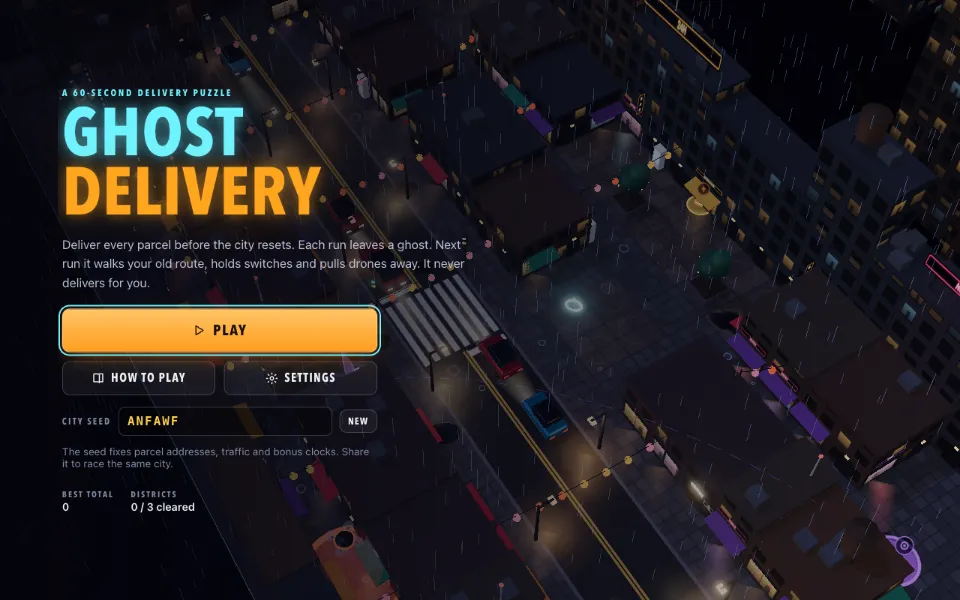
 Played ✓
EXP-02of 10Puzzle
Ghost Delivery
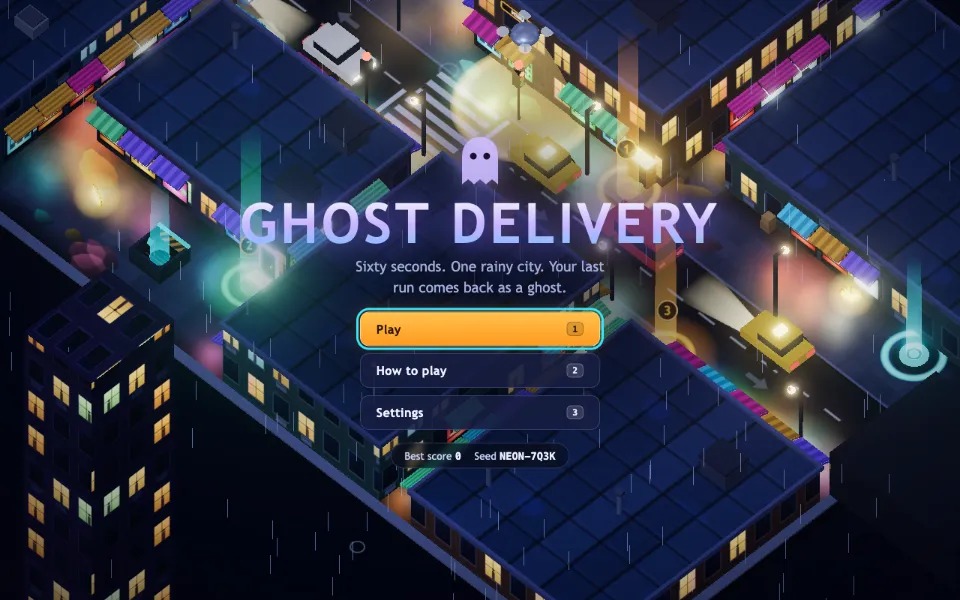
One minute in a rainy neon city. Your last run comes back as a ghost to help.
One brief went to frontier models. Here's what each of them built. Pick a version and play.
Played ✓
 Played ✓
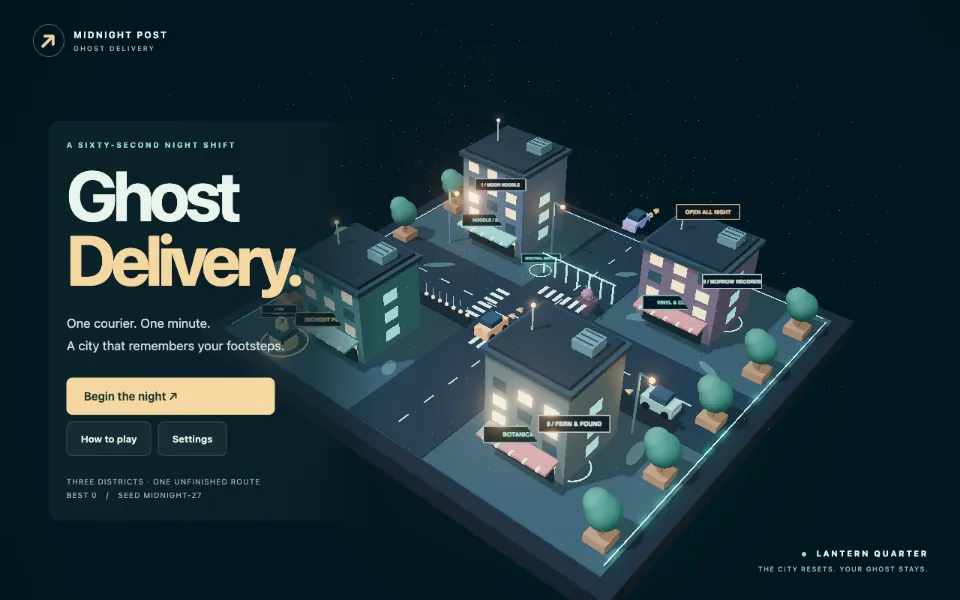 Played ✓
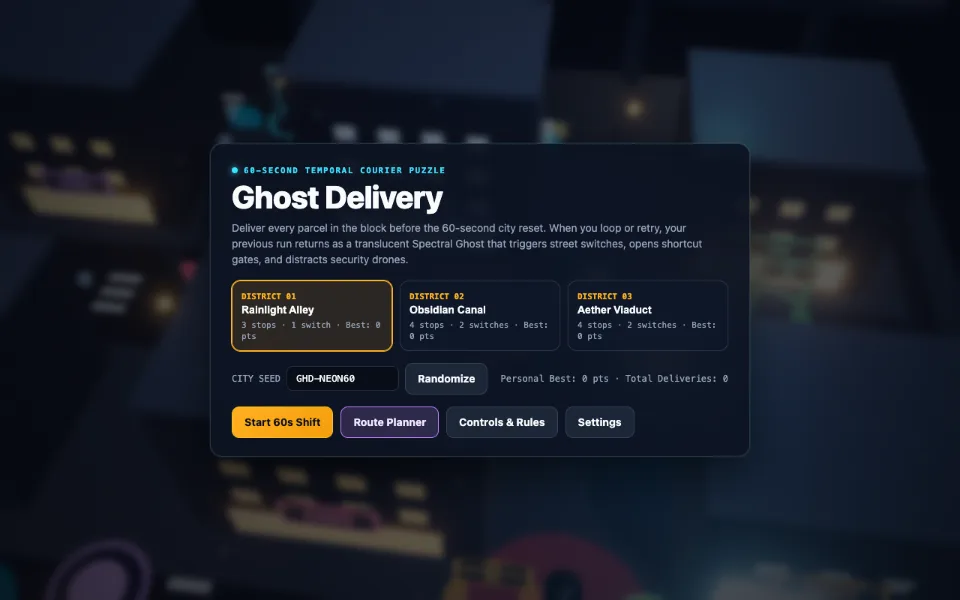 Played ✓
Gemini 3.8 Flash
High effort · coming soon
BuildingYour verdict
Which one did you like best?
Play at least two versions, then come back and vote. They open in a new tab.
The brief
Every model got exactly this.
490 words, copied straight from the prompt file. No follow-up hints, no model-specific tweaks.
- Stack
- Three.js, TypeScript, Vite
- Assets
- None. All generated in code
- Controls
- Keyboard, touch
You are a senior browser-game engineer and 3D gameplay designer. Inspect the repository and implement Ghost Delivery as a finished, playable browser game. Preserve unrelated code. If starting fresh, use Vite, TypeScript, and direct Three.js. The game world, courier, streets, vehicles, and effects must be real 3D content, not a flat mockup.
Game
Create an isometric arcade delivery-puzzle game in a compact, surreal city block. Every run lasts 60 seconds. The player must deliver a small set of parcels to marked addresses before the city resets. The central mechanic is a ghost replay: after each run, a translucent courier repeats the previous run’s recorded route and actions. The replay can press spectral street switches, reveal safe timing windows, and distract patrol drones, so planning routes across attempts is useful. It must not auto-complete deliveries for the player.
Play and progression
Use WASD to move, mouse or arrow keys to choose facing, left-click or Space to dash, E to pick up or deliver a parcel, and Escape to pause. Provide clear pickup/drop-off prompts and an accessible control explanation. Make movement quick and precise, with forgiving interaction range.
Each run should present a few delivery stops, moving traffic, one or two patrols, and optional shortcuts. Cars and hazards must telegraph movement and reset safely. The timer is a run challenge, not a daily-pressure mechanic. Let the player retry instantly with the ghost record preserved. Record the player’s position, facing, and interactions at a stable interval; replay deterministically and clean up old ghost data when it is no longer used.
Build a progression path through at least three city districts with changing layouts and visual themes. Add route planning between runs, parcel types with simple rules, optional time bonuses, and a clear score based on deliveries, remaining time, and safe driving/walking. Include a best score, recent run result, and reproducible seed. Difficulty should add route complexity and hazards rather than simply making movement less responsive.
Look and interface
Make the city feel like a handcrafted miniature: rainy neon alleys, warm shop windows, readable sidewalks, painted crossings, elevated tracks, small signs, and reflective puddles. Use clear colors for parcel targets, hazards, switches, and the ghost. Keep the palette stylish but maintain strong readability. Add small animations for pickup, successful delivery, near miss, city reset, and ghost replay start.
Use a crisp HUD showing the countdown, deliveries remaining, current parcel, score, and ghost status. Implement title, instructions, gameplay, results, pause, settings, and restart screens. Add sound and mute controls; use generated or existing local assets only. Ensure the ghost is visibly different from enemies and cannot obscure the player.
Technical requirements and completion
Use direct Three.js with a responsive WebGLRenderer, a smooth isometric camera, efficient geometry/material reuse, and deterministic replay. Handle resize, pause, focus loss, and WebGL failure. Save best score and settings in localStorage. Test that deliveries, retries, ghost recording/replay, traffic, and district progression all work. Run the build and relevant checks, update the README, and report how to run the game and any limitations.