 Played ✓
EXP-06of 10Racer
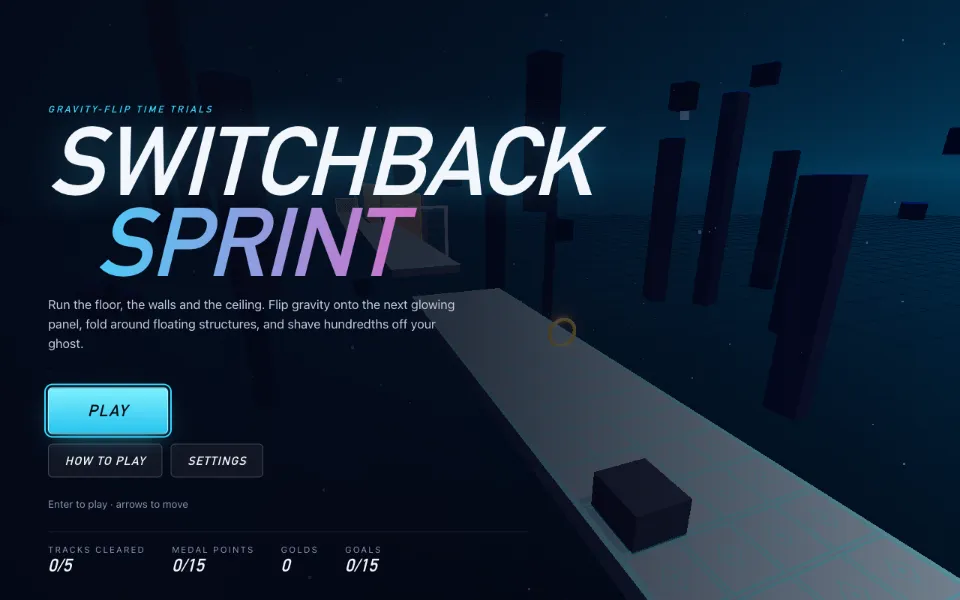
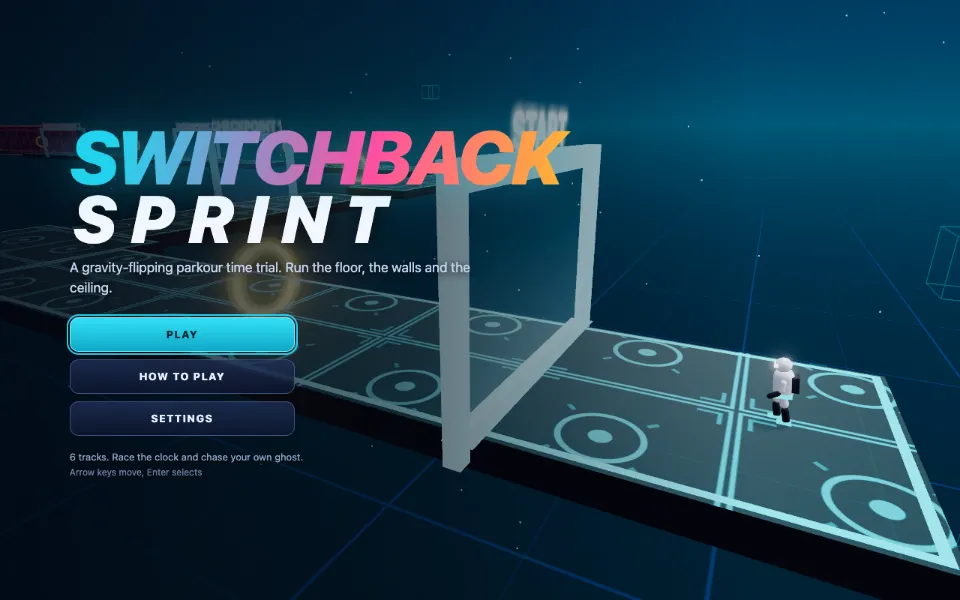
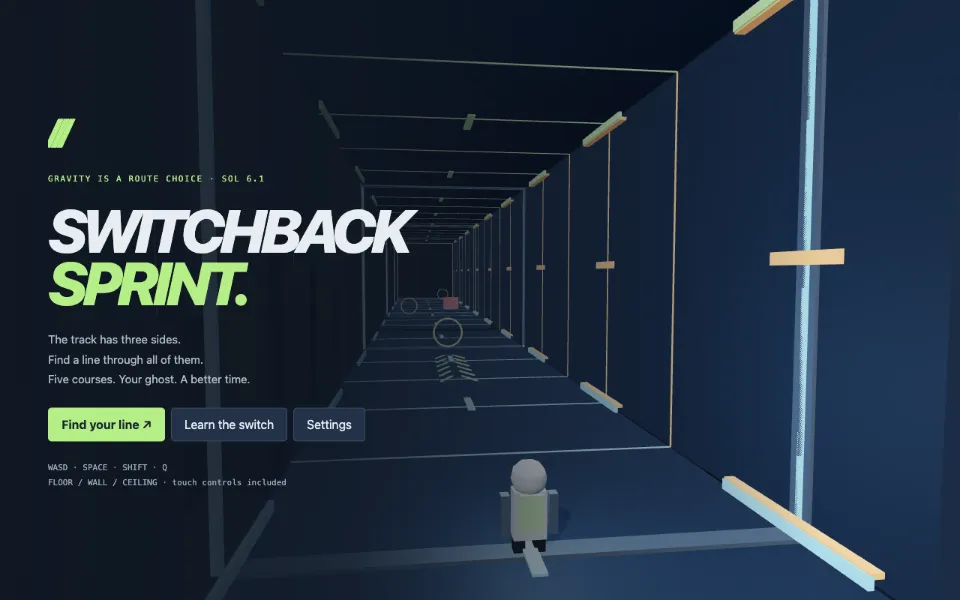
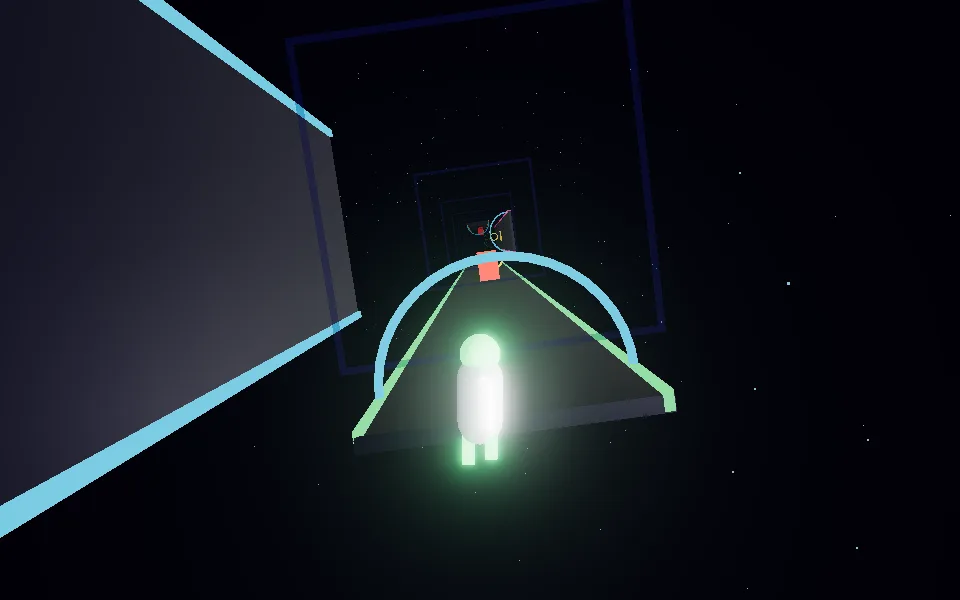
Switchback Sprint
Time-trial parkour where you decide which surface is down. Floor, wall, ceiling.
One brief went to frontier models. Here's what each of them built. Pick a version and play.
Played ✓
 Played ✓
 Played ✓
 Played ✓
Gemini 3.8 Flash
High effort · coming soon
BuildingYour verdict
Which one did you like best?
Play at least two versions, then come back and vote. They open in a new tab.
The brief
Every model got exactly this.
450 words, copied straight from the prompt file. No follow-up hints, no model-specific tweaks.
- Stack
- Three.js, TypeScript, Vite
- Assets
- None. All generated in code
- Controls
- Keyboard and mouse
You are a senior browser-game engineer and 3D platform-game programmer. Inspect the repository and implement Switchback Sprint as a polished, playable browser game using Three.js directly for the 3D track, player, obstacles, and effects. Preserve unrelated code. If the project is empty, use Vite and TypeScript.
Game
Create a fast 3D time-trial parkour racer. The runner races along compact tracks and can switch which surface counts as “down”: floor, wall, or ceiling. Routes fold around structures, letting the player run across different faces of the same geometry. The core skill is reading the track and timing gravity switches, jumps, and dashes. Use a third-person camera and prioritize precise controls over cinematic camera motion.
Controls: WASD or arrows to steer, Space to jump, Shift to dash, and Q or right-click to switch gravity to the nearest valid surface. Explain the control model before play. Provide forgiving coyote time and jump buffering. Switching gravity must be predictable, visibly animated, and never rotate the world in a disorienting instant. On a failed switch, show why it failed and respawn at the last checkpoint.
Tracks and competition
Implement at least five handcrafted tracks that teach mechanics gradually and introduce moving gates, split routes, boost strips, gaps, and timing hazards. A track should take under two minutes. Include checkpoints, start/finish gates, medals for completion time, a personal best, and a translucent ghost of the best run. Ghosts are visual references and do not block the player.
Make gravity surfaces explicit with color, symbols, or lighting. Include a practice mode with no timer and a time-trial mode with medals. Seed optional obstacle variations while preserving fair routes. Add simple challenge goals such as finish without using more than two dashes or collect all optional rings; do not require these for completion.
Visual design
Use a bold, high-contrast athletic sci-fi style: modular tracks suspended in a clean void, bright route rails, strong surface markings, speed streaks, animated gates, and color changes indicating gravity orientation. Keep the runner and next landing area readable. Use smooth animation, subtle camera follow and speed effects, and satisfying checkpoint/finish feedback. Do not overuse motion blur or bloom.
Interface and technical requirements
Implement title, track selection, tutorial, race, pause, results, personal-best comparison, and restart. Show timer, checkpoint count, current gravity surface, and medal target. Add keyboard navigation, audio/mute settings, reduced camera shake, and resize support. Save best times and settings locally.
Implement stable character movement and collision against track geometry. Use a fixed or semi-fixed simulation step, clamp frame delta, prevent tunneling where practical, and clean up track resources. Use a lower-cost setting for slower devices and show a clear WebGL error state. Smoke-test jump, gravity switching, checkpoint respawn, timer, ghost, and finish. Run build/checks, update README, and report run instructions and limitations.